
How long until I can park on it?
Foot traffic in 24 hours. Cars in 48 to 72 hours depending on humidity. Gary tells you the exact number when he finishes.
A pro-grade epoxy system turns a stained, pitted garage slab into a floor you can drop a wrench on. Gary grinds it, fixes the cracks, coats it, and broadcasts the flake himself. No crew of the day. Most garages are done in two days and driveable in three.
The System
Epoxy is a two-part resin that bonds to prepped concrete and cures into a hard, glossy, chemical-resistant shell. On a garage floor it does three jobs: it seals the slab so oil, brake fluid, and Florida humidity can't soak in; it takes tire traffic and dropped tools without chipping; and with a decorative flake broadcast it hides every stain and pour line the old slab had.
It's the same finish you see on dealership service bays. The difference between that floor and the peeling one down the street is almost never the product. It's the prep.
Prep · The Whole Difference
Every failed garage floor Gary gets called to look at failed for one of three reasons.
If a slab has been coated before and that coating is failing, Gary removes it. He doesn't coat over someone else's work.
Scope
Straight Answer
Short version: epoxy is the budget-right choice for an indoor garage that isn't in direct sun. Polyaspartic costs more, cures in a day instead of three, and won't yellow where sunlight hits it. If your garage door stays open all afternoon, or you need to park tomorrow, read the polyaspartic page. Gary installs both and will tell you at the quote which one your slab and your schedule call for.
Real Numbers
Epoxy garage floors run about $3 to $6 per square foot installed, which puts a typical two-car garage (roughly 400 to 500 square feet) at $1,500 to $3,000. Price moves with slab condition, how much old coating has to come off, and the flake blend.
Every quote is on-site and free. Gary doesn't quote from photos.
Real Jobs · Real Florida Concrete
The garage floors in the gallery were installed in Jacksonville Beach and St. Johns. Two different slabs to work with. Beachside garages in Jacksonville Beach sit close to the water table and see salt air every day, so the moisture test and a full grind matter more there than anywhere else Gary works. St. Johns, along CR 210 and Julington Creek, is mostly newer construction; a newer slab still gets the same test and the same grind, because a coating that fails on a two-year-old slab is a bigger headache than one that fails on a twenty-year-old slab.
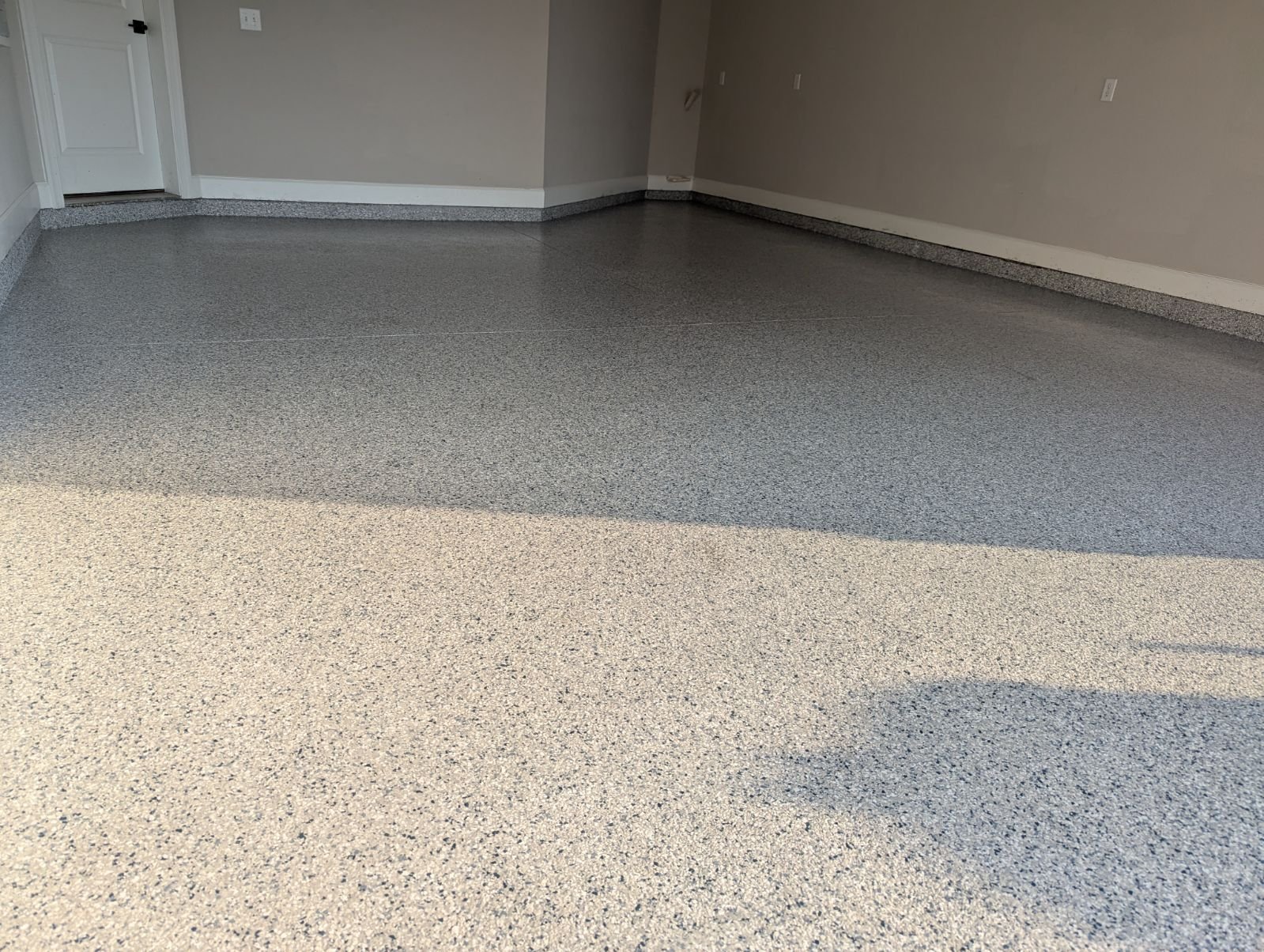
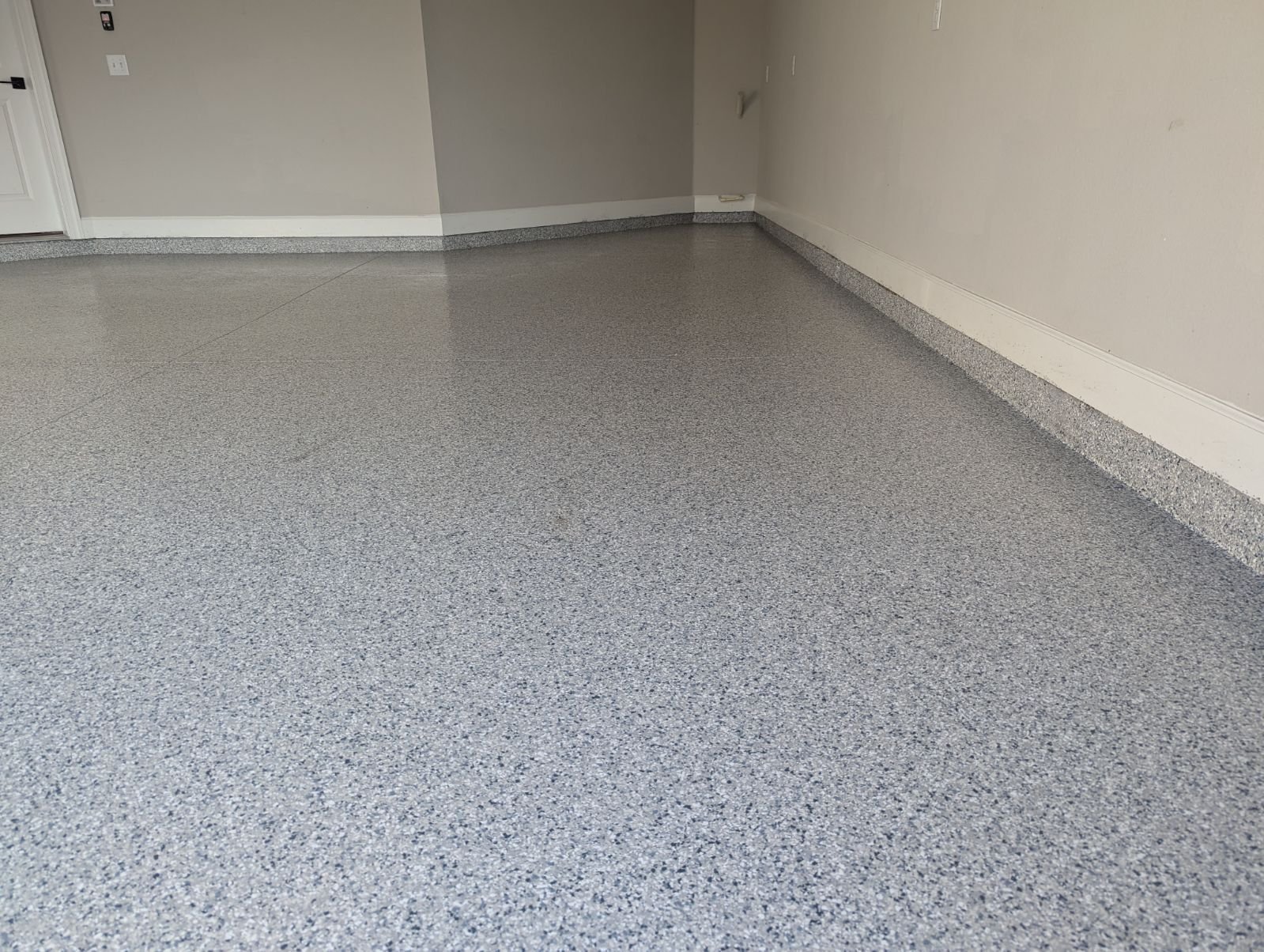
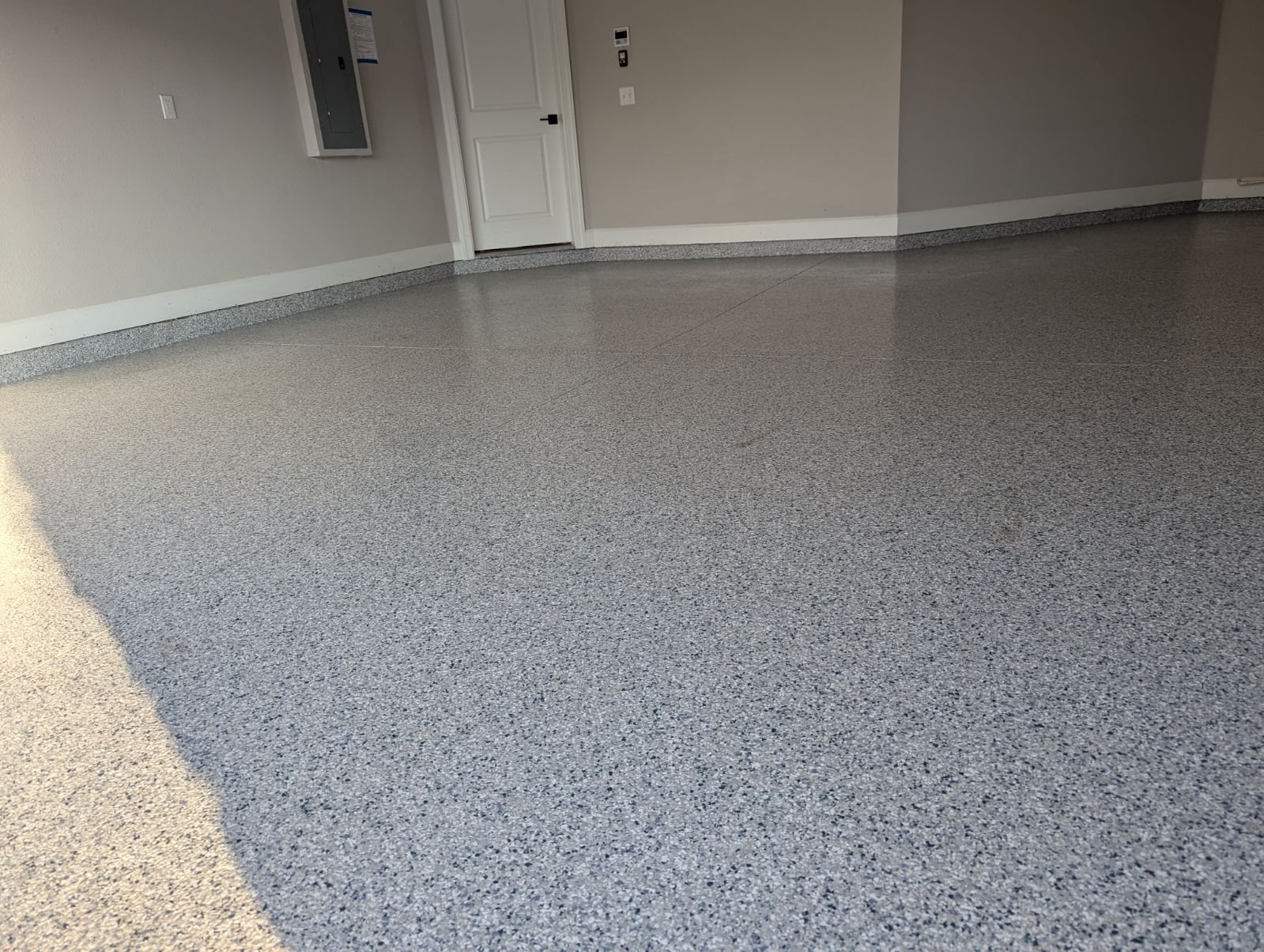
Every photo is a floor Gary installed. Zero stock. The full set is in the gallery.
Straight Answers
The stuff people ask before they book an epoxy job.
Foot traffic in 24 hours. Cars in 48 to 72 hours depending on humidity. Gary tells you the exact number when he finishes.
Yes, fully. Gary grinds wall to wall. He'll tell you at the quote what can stay against the wall on a tarp.
Not if the slab passes the moisture test and gets a real grind. That's the whole difference between a kit and a pro system.
No. If it's failing, it comes off first. If it's sound, Gary will say so and may recommend a topcoat instead.
Flake gives texture. For a wet-entry garage or a shop, ask for the anti-slip additive in the topcoat.
Yes. Clay and Putnam are home turf. Same prep, same price sheet.
Where We Work
Jacksonville, Jacksonville Beach, St. Augustine, Ponte Vedra Beach, Nocatee, World Golf Village, Orange Park, Fleming Island, Green Cove Springs, Middleburg, Keystone Heights, Palatka. Full list on the service area page.
/ Ready?
Book Gary's visit. He brings the flake samples and the moisture meter.